
Middlesex Released Photo Records
A booking photo is an image made during an arrest or custody intake. Release does not, by itself, erase the record. Connecticut General Statutes Sec. 1-215 states that records of arrest are public from the time of arrest, subject to exceptions and redactions. That law supports public access to arrest records. It does not require every police department or CT DOC facility to post each photo on a website.
Connecticut’s unified correctional system also matters. There is no current Middlesex County sheriff jail or county booking-photo roster. Hartford Correctional Center serves Middletown court matters, but it is a CT DOC facility in Hartford. A photo associated with a Middlesex arrest may be held by the arresting police department, CT DOC, or another agency. The court keeps case records, though a court docket may not contain the custody photograph itself.
A released mugshot is historical evidence of an intake image, not proof of guilt, the final disposition, or present custody. Pair any photo with the official Judicial Branch docket and current correctional source. A nolle means the prosecution declined to continue at that time. An acquittal means the person was found not guilty. Those outcomes change the record context even if an old copy of the image still circulates elsewhere.
Where Middlesex Mugshots Appear
No single portal covers every Middlesex County released booking photo. The right channel depends on who made the image and what happened to the record. Official government sources should be checked before an image copied by a news report or another site.
| Channel | Has a photo? | How to access |
|---|---|---|
| CT DOC inmate information | Only if the public person record displays one | Search by CT DOC number or name and inspect the official record. |
| CT DOC Freedom of Information | Possibly, subject to law and exemptions | Request a named public booking or custody photograph. |
| Originating police department | Possibly | Ask the agency that made the arrest for the disclosable arrest image. |
| Judicial Branch case record | Usually a case source, not a photo gallery | Use it to confirm docket, charges, and disposition tied to the arrest. |
| Connecticut sex offender registry | May show an image or descriptors for qualifying registrants | Use only for a person subject to registration; it is not a general release list. |
| News or third-party copy | Sometimes | Treat as secondary and verify the image and outcome with official sources. |
VINELink is a custody-status and notification service, not a reliable photo archive. The Federal Bureau of Prisons locator is the correct custody source for a federal sentence, but its role is release confirmation rather than a Middlesex booking-photo request. These systems should not be used as substitutes for the agency that created the image.
Note: Middlesex County has no official sheriff roster, app, 24-hour photo feed, or 72-hour booking-photo archive.
Check CT DOC Mugshot Records
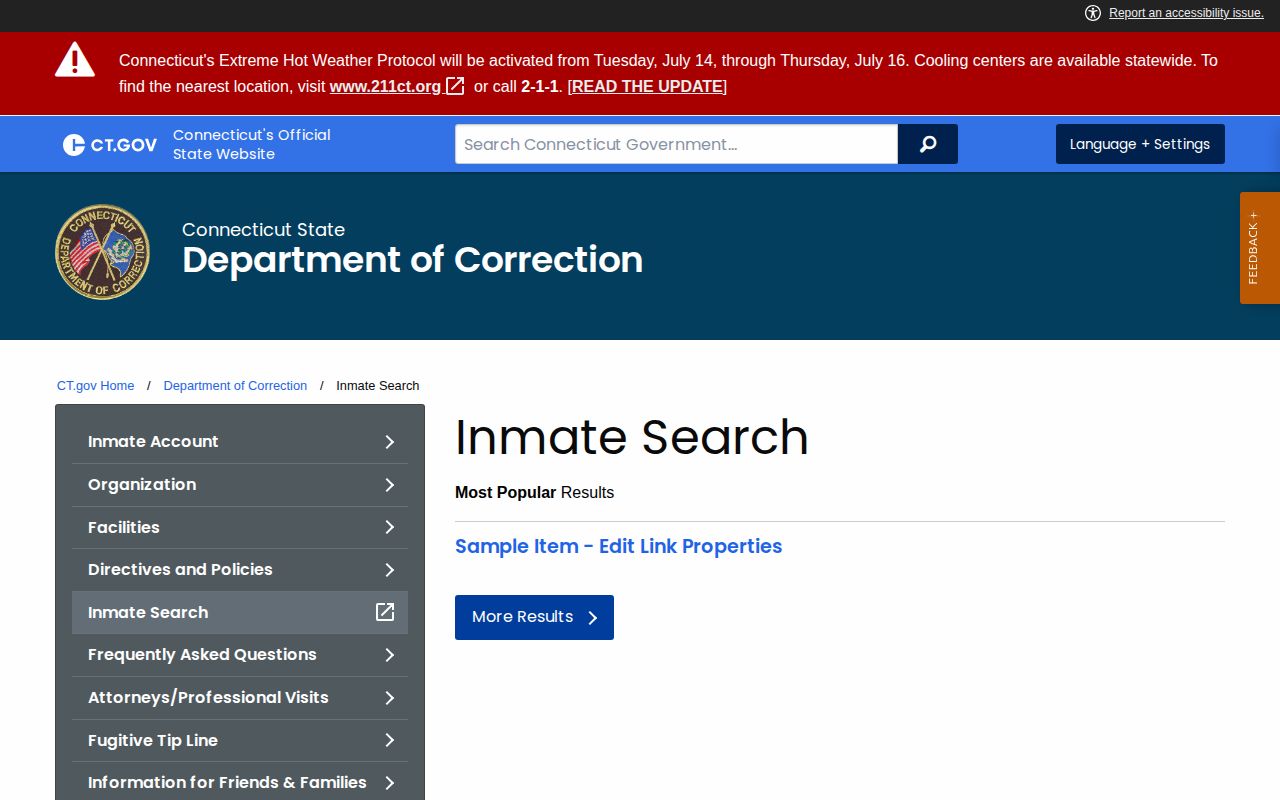
The CT DOC inmate search landing page is the first official correctional route. Open the state inmate information search, use a CT DOC number when known, and compare identity fields before relying on a match. If the public record displays a custody image, note the source and date viewed. If no image appears, do not assume that no photograph exists. The public interface and the agency record are not necessarily the same set of material.
The matching CT DOC search source appears below. It confirms the statewide route used for Middlesex County custody records.
Hartford Correctional Center may be tied to a Middletown pretrial case, while New Haven Correctional Center may appear after a transfer or on another court route. Facility assignment helps identify which agency record to name. It does not turn either facility into a county mugshot gallery.
CT DOC warns that inmate information changes quickly and is updated daily. A photo beside a live record does not prove that the person is still incarcerated. Read the custody status and release fields, then check the court disposition. A fully discharged person may be absent from the live search even though a lawfully disclosable agency photo remains in a record file.
Request a Middlesex Booking Photo
When the public CT DOC view has no image, submit a narrow records request. The request should identify the image rather than seek the entire correctional file. Ask for “any public booking photograph, custody photograph, or mugshot associated with the named booking or incarceration, subject to lawful redaction and exemptions.” Include enough facts to find the right person without asking for material that is not public.
- Identify the record holder. Use CT DOC for a correctional-center image or the arresting police department for a local arrest image.
- Provide the full name, date of birth if known, CT DOC number, facility, approximate custody dates, and Middlesex docket number if known.
- Name the requested photo and ask for the public copy in the agency’s available format.
- Do not request juvenile, victim-identifying, medical, security-sensitive, sealed, or erased material.
- Keep the request response. If the image is denied or redacted, review the cited reason before narrowing or correcting the request.
The CT DOC Freedom of Information page lists its online request portal, 24 Wolcott Hill Road, Wethersfield, CT 06109, phone (860) 692-6290, and fax (860) 692-7873. Connecticut FOIA provisions in Sec. 1-210 and Sec. 1-212 govern inspection and copies, while exemptions and record restrictions can still apply.
The official request page shown below is the correct state route for a CT DOC custody-photo request.
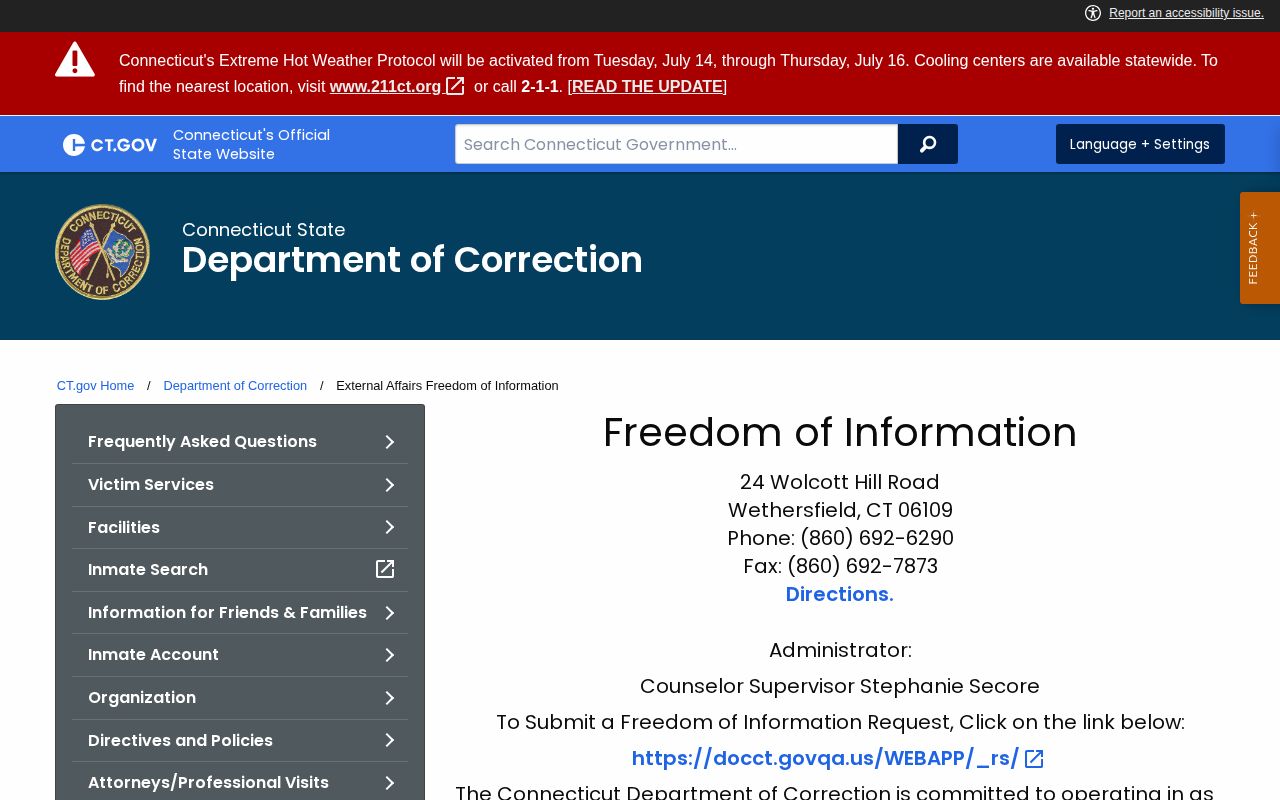
A focused request connects the photo to a known booking and makes clear that only disclosable material is sought.
Middlesex Mugshot Policy Is Absence
The distinctive Middlesex policy fact is the absence of a local photo feed. No official county 24-hour or 72-hour release page was found. No sheriff mobile app was found. Connecticut’s state-run custody structure means there is no county office that can simply be treated as the Middlesex jail photo desk.
For a CT DOC image, use the public state record if the interface shows one, then use CT DOC FOI. For an arrest image that never entered CT DOC, ask the originating police agency. Use the Judicial Branch criminal and motor-vehicle lookup to identify the docket and disposition. This source map prevents an old image from being separated from the case that explains it.
Third-party pages and local news can carry a copied photo. They are secondary channels. A copy may be old, mislabeled, cropped, or detached from a dismissal, nolle, acquittal, or later erasure. No commercial mugshot publisher or data broker is linked here. An official record and current docket provide a more dependable basis for verification.
Note: A photo found outside government records should be checked against CT DOC, the court docket, or the agency that made the arrest.
Middlesex Registry Photo Limits
The Connecticut sex offender registry service is a separate public source maintained by the Department of Emergency Services and Public Protection. It may include descriptors, offense information, a last known address, and an image where the registry provides one. It applies only to people who must register under the governing rules.
Do not use the registry as a general Middlesex County released-inmate gallery. Most released people are not listed there. A registry result also has its own stated limits and purpose. Match the identity with care and rely on the registry’s current official record, not an image copied elsewhere.
For a federal release, use BOP records to confirm the federal custody question. For an immigration custody issue, use the ICE locator only when relevant. Neither route replaces a request to the state or local agency that made the booking photograph.
Middlesex Mugshots After Erasure
Connecticut Sec. 54-142a governs erasure of qualifying criminal records. Erasure can follow an acquittal, dismissal, a nolle after the statutory period, or another qualifying outcome. Clean Slate pathways can also affect eligible convictions after legal requirements are met. Once a record is erased, agencies and clerks may be restricted from disclosing its existence or contents.
Erasure is not the same as editing every copy on the internet. The research found no simple Connecticut fee-for-removal statute comparable to laws in some other states. Do not pay anyone based on a promise that an official record can be erased on demand. Use the court and agency process for a record correction, sealing issue, or erasure question. An old news image may be governed by a publisher’s practices as well as the underlying record status.
The Connecticut erasure statute chapter is the official legal source behind the image below.
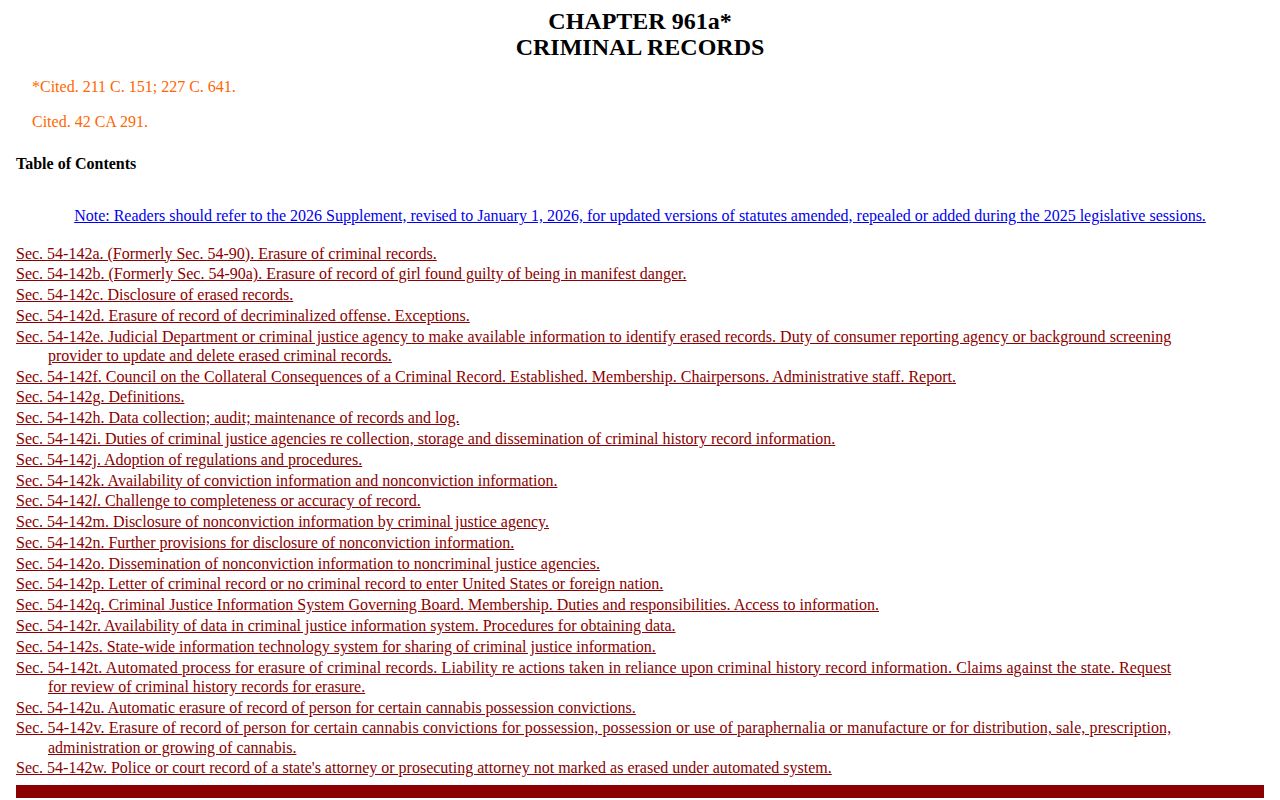
That statute explains why a missing photo can be the result of a lawful record restriction rather than a failed search.
A request denial may cite erasure, sealing, juvenile confidentiality, victim protection, an active law-enforcement concern, or a security exemption. Ask the record holder for the basis. Do not assume that public access to an arrest record means every photo must be released without redaction.
For custody status and case context, the Middlesex County released inmate search and records hub maps CT DOC, the Middletown court, VINE, and formal request routes. The photo should always be read beside those current facts.